Movement & balance
Learn to move your hips, keep a stable base and get back to your feet. Hip escapes (“shrimping”), bridges and technical stand-ups are movements you’ll reuse throughout training.
Hip escape · Bridge · Technical stand-up
 Try a class ↗
TECHNIQUE / CONTROL / PROBLEM SOLVING
Jiu-Jitsu is a grappling discipline built around position, leverage and control. You learn to navigate close contact, escape difficult positions and work through problems with a training partner.
Adults · beginners and experienced students
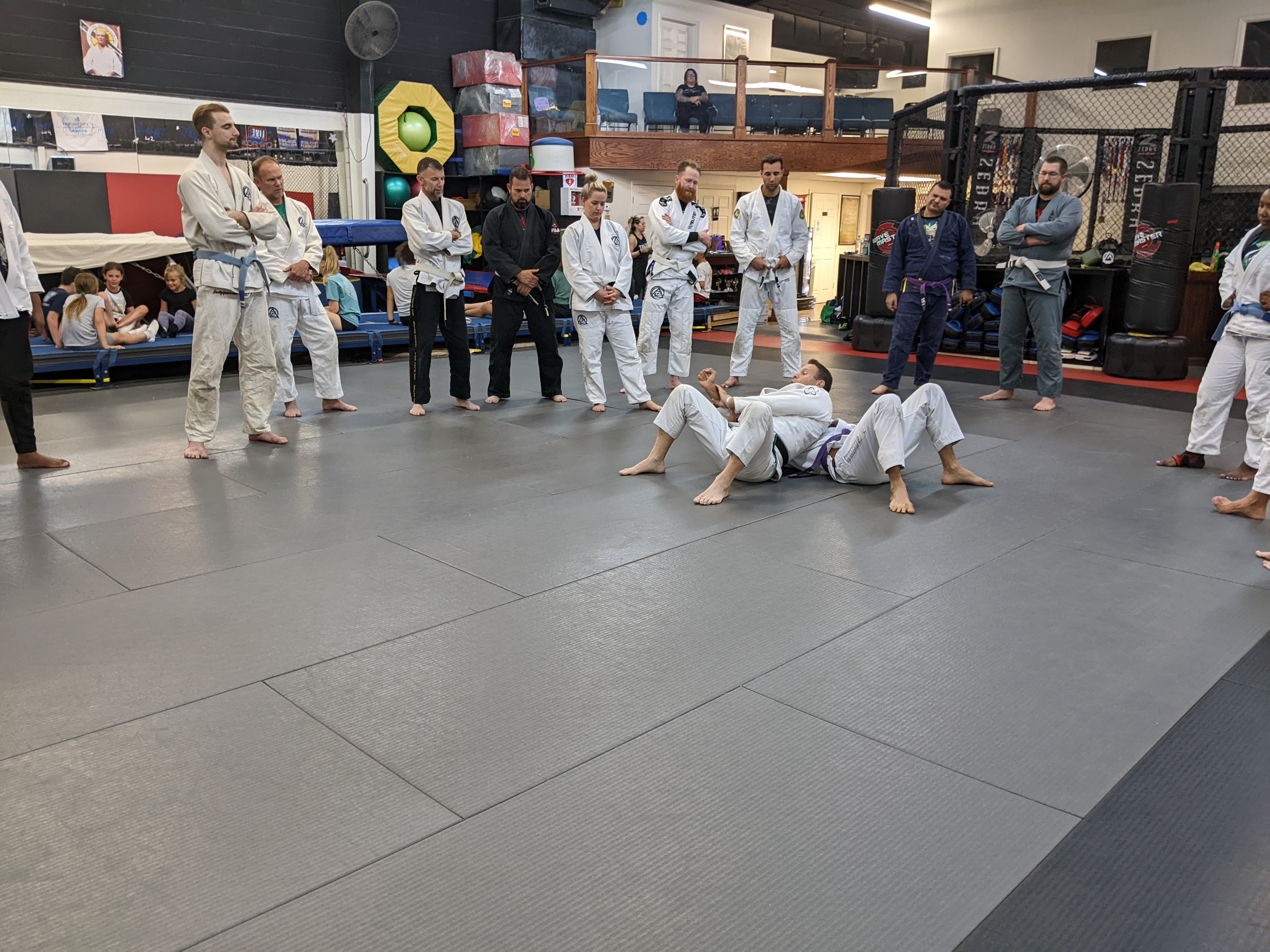
BRAZILIAN JIU-JITSU · STARTING OUT
Learn the positions, movements and decisions behind Brazilian Jiu-Jitsu. These are common starting points; your coach sets the lesson order and pace.
Learn to move your hips, keep a stable base and get back to your feet. Hip escapes (“shrimping”), bridges and technical stand-ups are movements you’ll reuse throughout training.
Hip escape · Bridge · Technical stand-up
Get familiar with guard (using your legs to manage a partner), side control, mount and back control. Learn what each position offers and how to stay balanced as you move between them.
Guard · Side control · Mount · Back control
Practice making space and recovering a better position when underneath a partner. Common examples include the bridge-and-roll escape from mount and hip escapes from side control, using frames to create room to move.
Frames · Mount escapes · Guard recovery
From guard, learn to manage distance and use a sweep to move from the bottom to the top. From above, work on posture and passing around or through a partner’s legs to establish control.
Closed guard · Hip-bump sweep · Basic guard passes
Build balance before taking the action to the ground. Beginner work can include breakfalls, clinch control and introductory takedowns, with your coach setting the level of resistance.
Breakfalls · Clinch control · Takedown basics
Get introduced to finishes such as the straight armbar, Americana and rear naked choke, alongside their defenses. Practice with control, tap early to stop, and release immediately when your partner taps or says stop.
Armlocks · Chokes · Tapping & releasing
At first, progress might mean recognizing a position, remembering an escape or practicing more calmly with a partner. Revisit the basics and build consistency. Coaches guide your development and decide when you’re ready for your next rank.
Coaches share promotion milestones and other announcements in the gym updates on our homepage.
WHAT TO EXPECT
Meet the coach and explain any previous training experience.
Watch a demonstration and break the movement into manageable steps.
Repeat with a partner and ask for help as the details become familiar.
Gi training uses a Jiu-Jitsu uniform that can be gripped. No-gi uses athletic training clothes and different gripping options. Ask which equipment applies to your chosen class.
Tell the coach that you are new and discuss the class format before joining. The schedule lists fundamentals and sparring separately, so we can help you select an appropriate starting point.
You can ask about starting at your current experience and fitness level. Let the coach know about any limitations before class.
YOUR NEXT STEP